Essays & series
The EcoNiti blog.
Essays on Economics, career pathways, and the exams that reward serious Economics thinking — UPSC CSE Economics Optional, IES, RBI Grade B DEPR, UGC NET and CUET PG.
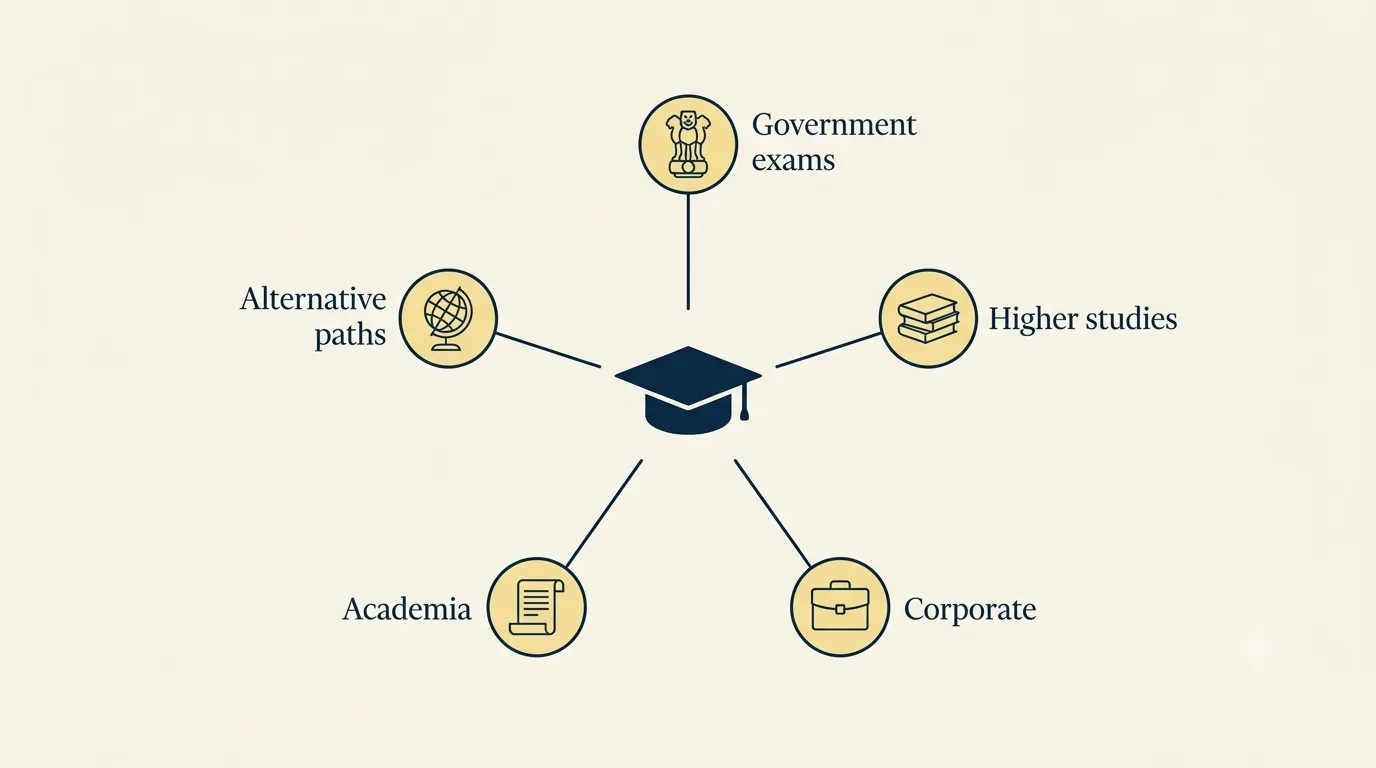
Careers in Economics · Part 1
Careers in Economics: a structured framework
After an Economics degree, five broad paths open up — government exams, higher studies, corporate, academia and emerging paths. Here is the framework we use with our students to choose the right one, and the four questions that should decide it.
Start reading →The reading path
Each post picks up where the previous one leaves off.
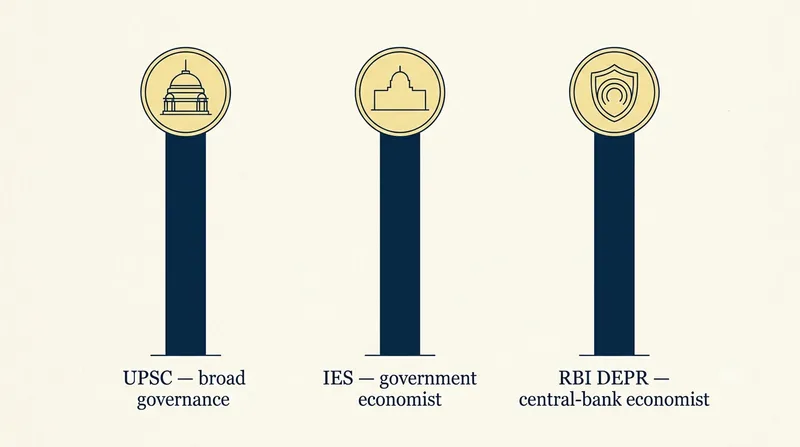
UPSC vs IES vs RBI Grade B DEPR: an honest comparison for Economics students
The three exams every serious Economics postgraduate considers — compared on eligibility, difficulty, cycle length, work and pay, with the four decision questions applied to each.
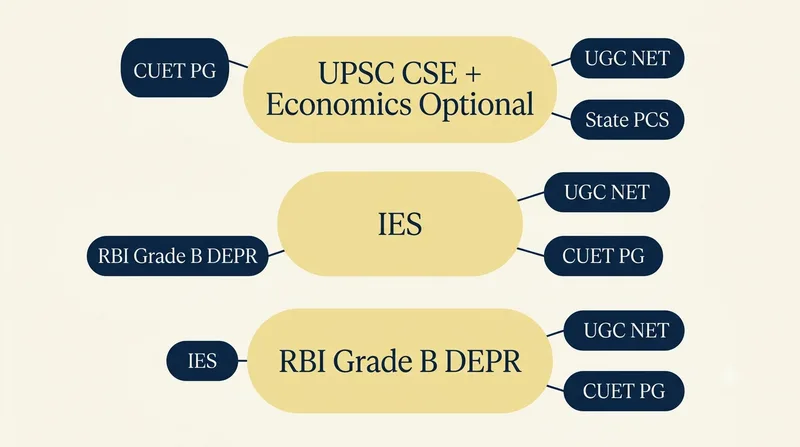
The backup exam cluster: a real Plan B for Economics government exams
A backup is not five parallel preparations. It is one primary exam surrounded by a small cluster of syllabus-aligned exams. Here is how to build a real backup — and four myths that push students into fake ones.
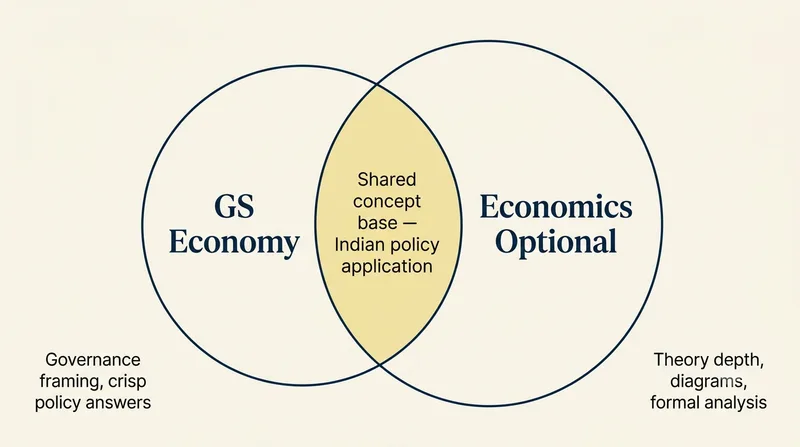
UPSC CSE Economics Optional: the case for choosing it
Economics as a UPSC CSE optional is worth 500 out of the 1750 Mains marks that determine your merit rank. The strategic case for choosing it — GS III overlap, head start, analytical lens, smaller specialised pool, and whether it produces top ranks.
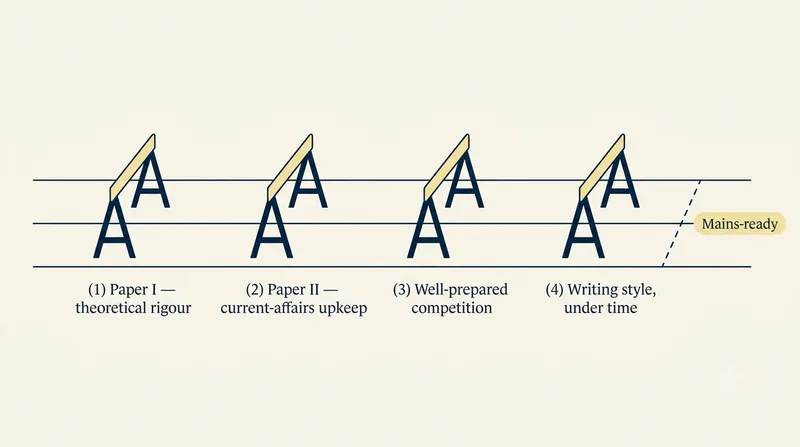
UPSC Economics Optional: the four honest concerns, and how to test the fit
Paper I is theoretically demanding, Paper II has a current-affairs maintenance cost, the competition is well-prepared, and the writing style is specific. The four concerns, a three-question test, and four preparation principles.
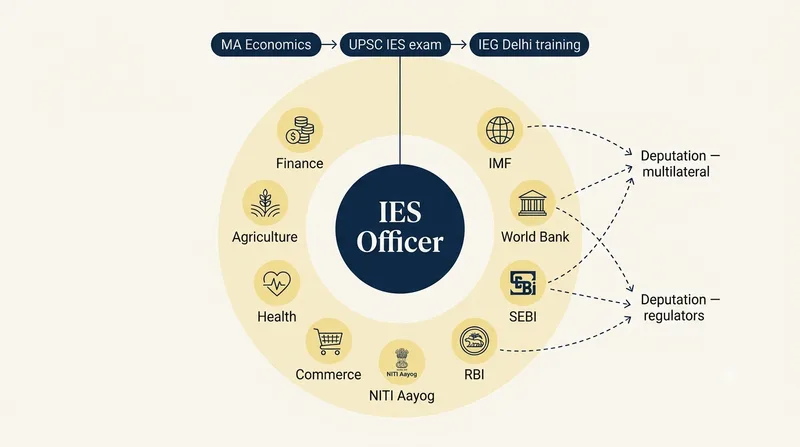
The Indian Economic Service (IES): a hidden gem for serious Economics students
The IES is the specialist government-economist cadre of the Government of India — Group A Central Service under the Ministry of Finance, cadre postings across ~55 Union ministries, deputation ladder to World Bank, IMF and RBI. The hidden-gem case and the career shape.
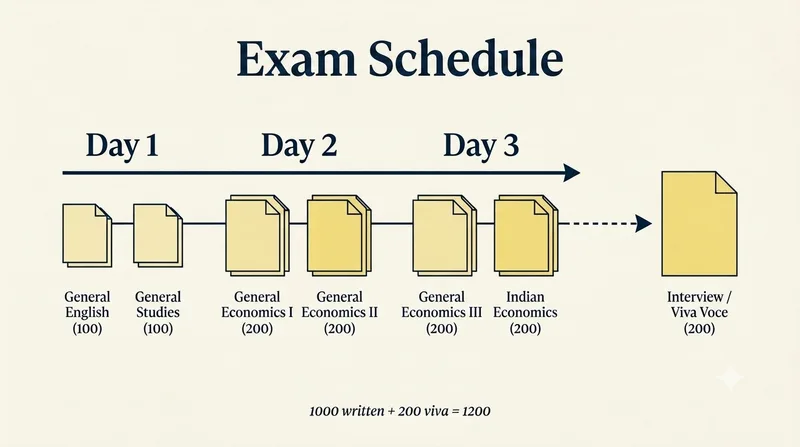
IES exam pattern and syllabus: what UPSC actually asks
The Indian Economic Service is a 1000-mark written exam plus a 200-mark interview — no MCQ phase, six papers, four syllabus buckets. Eligibility, pattern and syllabus, with a paper-by-paper logic map.
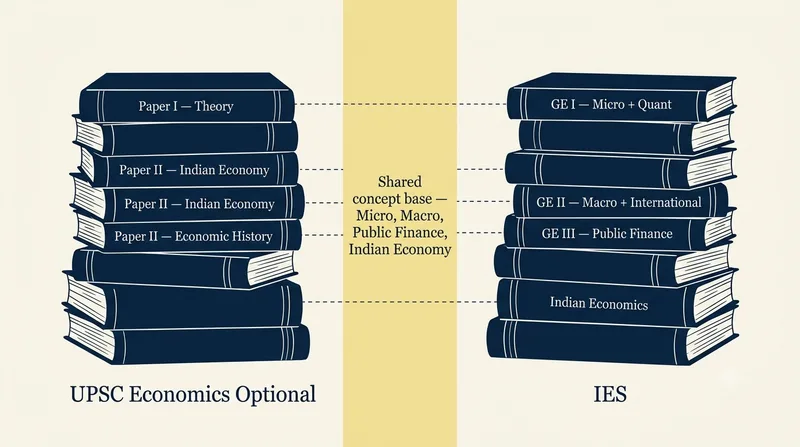
IES syllabus vs UPSC Economics Optional: the overlap map
IES and UPSC Economics Optional share the bulk of their concept base but differ in scope, style and paper structure. The overlap table, a joint-strategy blueprint, and four preparation principles for both.
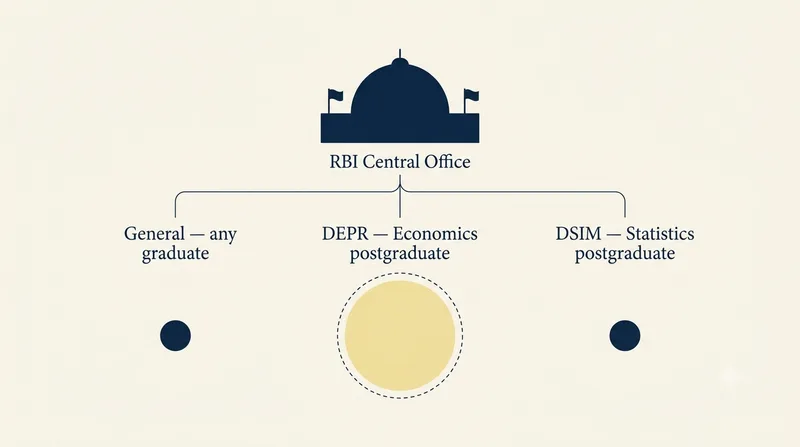
RBI Grade B DEPR: the central-bank economist path for Economics graduates
RBI Grade B has three tracks — General, DEPR and DSIM — with different eligibility and roles. This post covers what DEPR is, why it deserves serious consideration, and why it is not just the backup to IES that it is often described as.
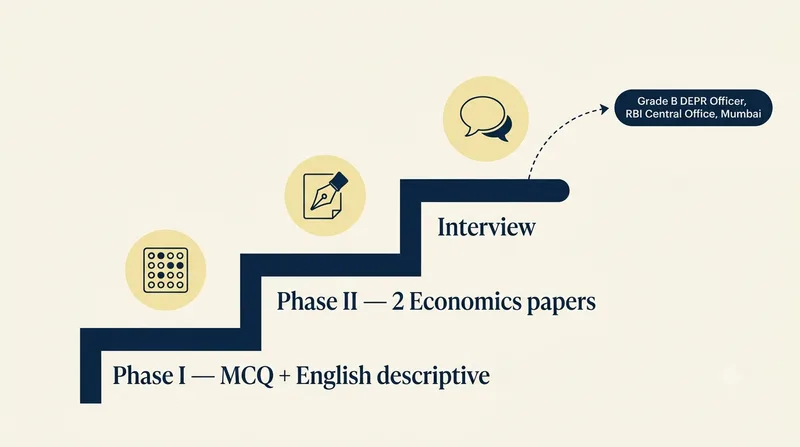
RBI Grade B DEPR exam pattern and syllabus: Phase I, Phase II and the interview
RBI Grade B DEPR is three stages — Phase I MCQ + descriptive English, then two descriptive Economics papers in Phase II, then interview. Eligibility, pattern and syllabus paper by paper.
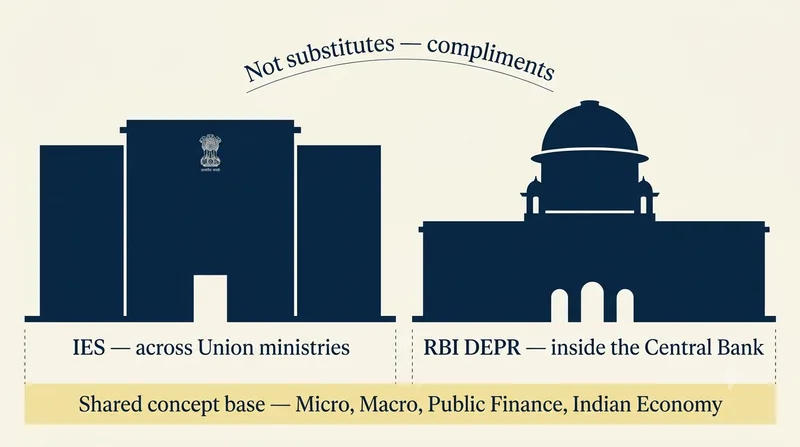
RBI Grade B DEPR vs IES: the comparison, the joint strategy, and one timing rule
Compare RBI Grade B DEPR and Indian Economic Service: work, eligibility, exam papers, syllabus overlap and how to plan preparation for both.
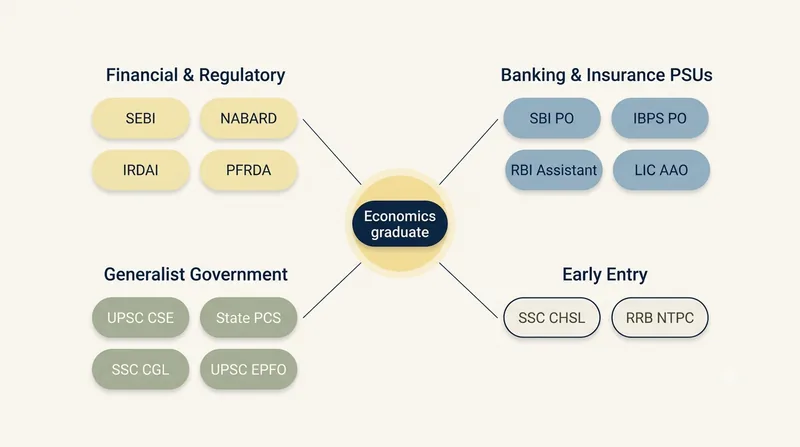
The other government exams for Economics students: a four-cluster map
UPSC CSE, IES and RBI Grade B DEPR are not the whole government-exam map. Four other clusters — financial regulators, banking and insurance PSUs, generalist services, and early-entry exams — are all valid, and an Economics background is a real edge in every one of them.
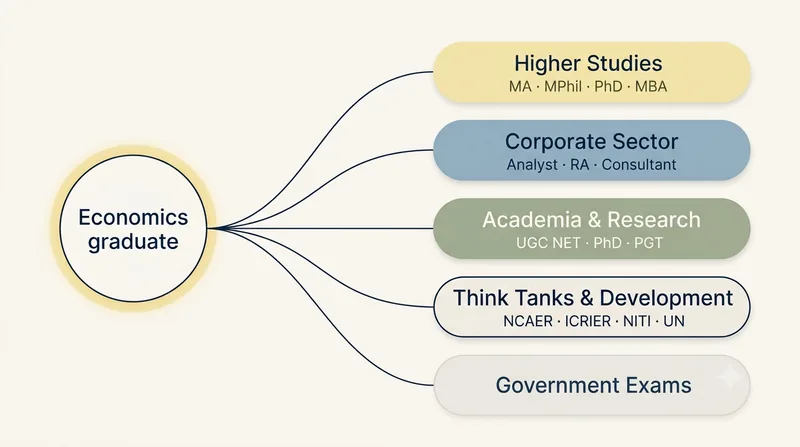
Beyond government: higher studies, corporate, academia and alternatives
Government is not the only serious path after an Economics degree. The series finale maps the other four — higher studies, the corporate sector, academia and research, and policy-adjacent alternatives — and closes with the four questions that decide which one is yours.