RBI Grade B often gets described to Economics students as “the second-best government exam if you don’t crack IES”. That framing does the exam — and the career — a disservice.
DEPR is not IES’s cousin. It is the entry route into the Reserve Bank of India’s Department of Economic and Policy Research — the central bank’s own in-house research and analysis wing. Its officers work on inflation, monetary policy, financial-sector research, macro forecasting and the data that feeds directly into the Monetary Policy Committee’s decisions. That is a specific kind of Economics career, and the exam is designed for it.
This post covers the work and the three RBI Grade B streams. For eligibility and where to begin, use the RBI Grade B DEPR exam guide. Read the paper-by-paper syllabus explanation when you are ready to plan your study, or compare DEPR with IES if you are deciding between the careers.
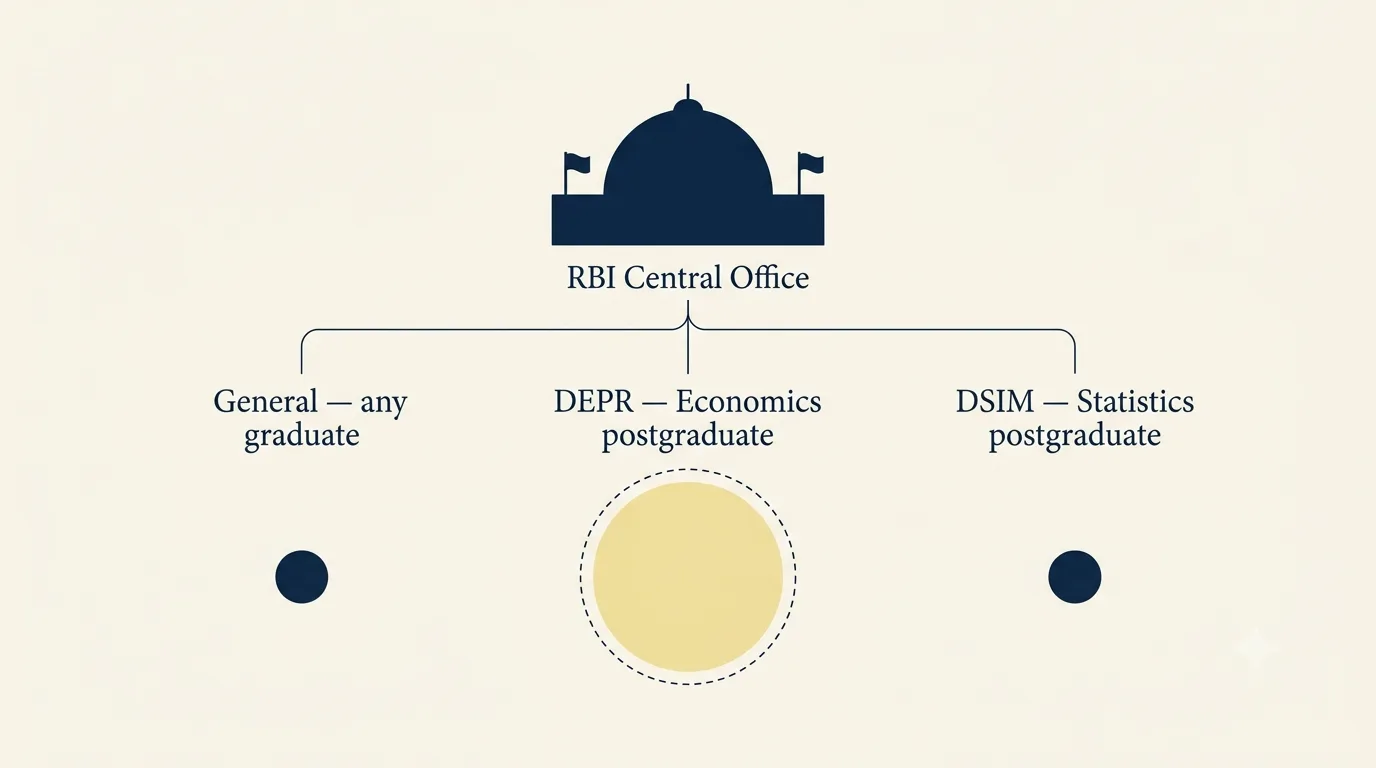
First — RBI Grade B has three tracks
For an Economics student, this is the single most important thing to know.
Swipe sideways to see all columns.
| Track | Full name | Best-fit background | Nature of the work |
|---|---|---|---|
| Grade B (General) | Grade B Officer (General) | Graduation or postgraduation in any discipline, subject to the qualification and marks requirements | Managerial and regulatory functions across RBI’s departments |
| Grade B (DEPR) | Department of Economic and Policy Research | Eligible MA/MSc in Economics, Finance or specified related subjects, with the required subject coverage and marks | Economic analysis, research and policy work |
| Grade B (DSIM) | Department of Statistics and Information Management | Specified postgraduate or four-year undergraduate qualifications in statistics, quantitative economics, econometrics, data science and related fields; check the full list | Statistical modelling, surveys, forecasting, data infrastructure |
For an Economics postgraduate, DEPR is the most directly economics-focused stream. Some quantitative economics and econometrics qualifications can also meet DSIM’s requirements. Compare the work and papers, then check your exact degree and marks against the notification on RBI Opportunities.
What DEPR officers actually do
Depending on the posting, a DEPR officer may work on:
- Inflation analysis — CPI / WPI dynamics, core inflation, food inflation, inflation expectations.
- Monetary policy input — analytical work that feeds into the MPC’s assessment.
- Macro research — growth, output gap, employment, aggregate demand and supply.
- External sector — balance of payments, capital flows, exchange rate developments.
- Financial markets and banking — credit growth, sectoral credit, banking sector health, non-performing assets, transmission.
- Fiscal-monetary interface — the coordination questions where the RBI and Ministry of Finance meet.
Outputs are internal analytical notes, contributions to RBI publications, forecasts and policy briefs.
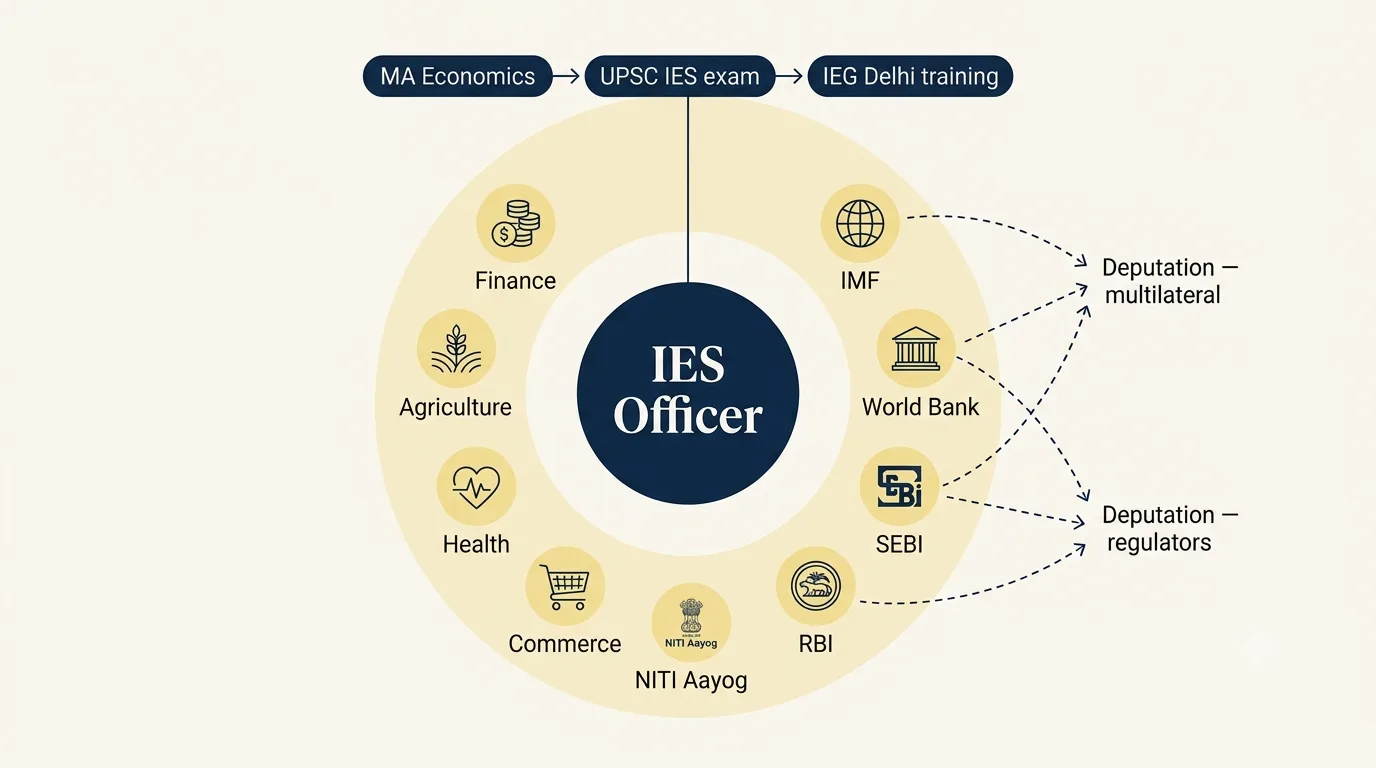
One line: UPSC CSE creates administrators. IES creates government economists. RBI DEPR creates central-bank economists.
Why DEPR is attractive — honestly
Four reasons.
-
Directly Economics-heavy work. In most government careers Economics is useful indirectly. In DEPR, your Economics training is the day-to-day work. If macro, monetary economics, banking and Indian macro data genuinely interest you, this is unusually direct.
-
Institutional prestige. RBI is India’s central bank; its decisions on inflation, interest rates, exchange rates, credit conditions and banking stability affect the whole economy. Working inside the analytical machinery that supports those decisions carries real weight.
-
Pay and benefits. RBI offers a structured pay scale with allowances, medical benefits and housing support under its service rules. These are meaningful advantages alongside the work itself. Check the current notification for the package and benefits; day-to-day workload varies by role and posting.
-
Focused exam and pool. Competition is serious, but this is a specialist examination. Your Economics training is directly relevant to the papers and the work, so preparation builds on the subject you have already chosen to study.
Who DEPR fits
If you are studying or have completed an eligible postgraduate course, DEPR is worth considering. You still need to hold the qualification by the notification’s cut-off date. It may suit you if:
- You are drawn to macro, monetary policy, inflation, banking-sector research, financial-stability work.
- You enjoy working with data, reading research and writing clear explanations of economic issues.
- You want a career largely within RBI, with opportunities to work across economic research, policy and related departments as your career develops.
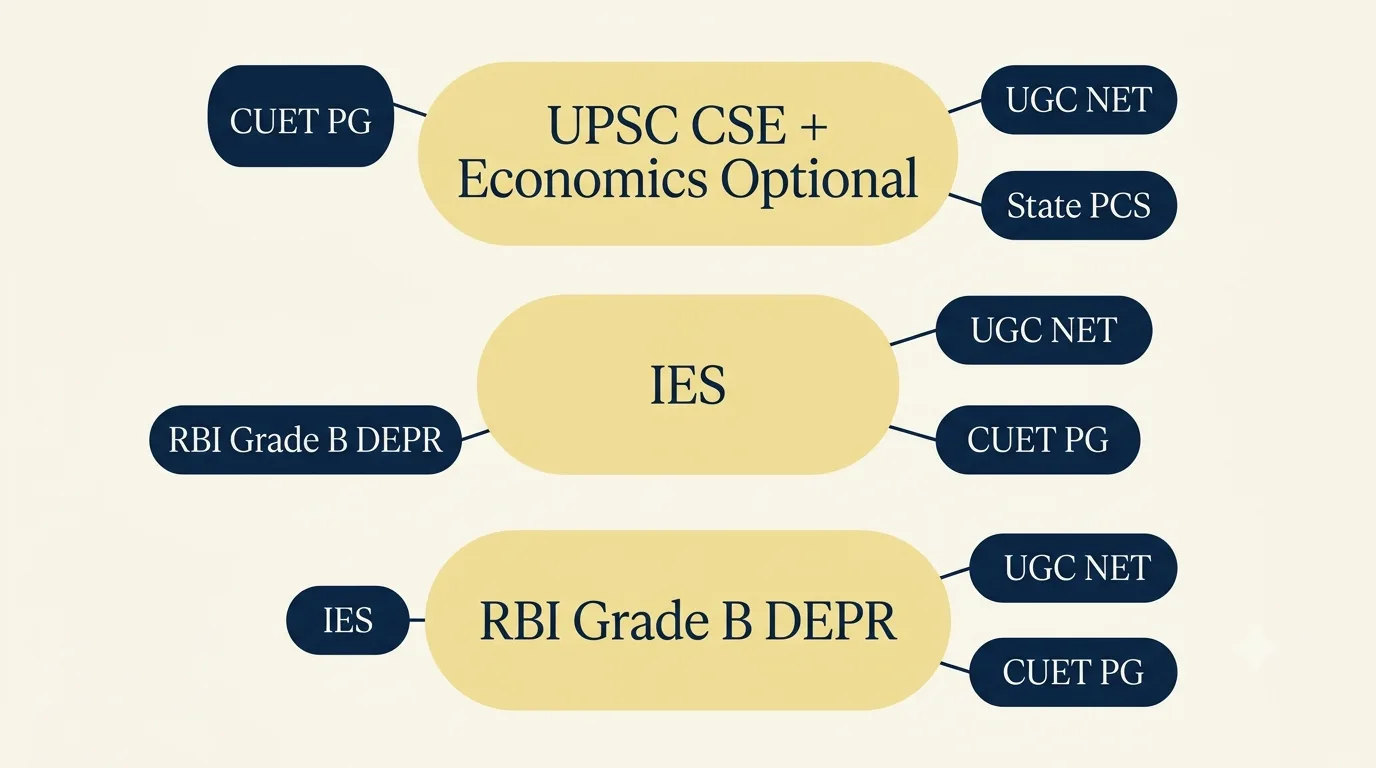
If your instinct is fiscal policy, scheme design and cross-ministry work, IES is the closer fit, and DEPR is the natural backup. For how DEPR sits in a real backup cluster alongside UPSC CSE and IES, see Post 3 — the backup cluster strategy.
Takeaway. RBI DEPR is not the fallback for candidates who could not crack UPSC. It is a specific, high-quality career for students who want to use Economics — especially macro, monetary economics and Indian economy — seriously inside India’s central bank. If that describes your interest and temperament, DEPR deserves a serious place in your plan, either as the primary or as the closest backup to IES.
Sources and further reading
- Reserve Bank of India, Opportunities — opportunities.rbi.org.in: current-cycle Grade B (General, DEPR, DSIM) notifications, syllabi and FAQs.
- Reserve Bank of India, Publications — rbi.org.in: Annual Report, Monetary Policy Report, Financial Stability Report, Report on Currency and Finance, Handbook of Statistics on Indian Economy.
- Economic Survey — indiabudget.gov.in/economicsurvey: the annual Economic Survey, primary reference for the Indian Economy portion.
- Union Budget — indiabudget.gov.in: fiscal-side reference.
- Union Public Service Commission — upsc.gov.in: IES / ISS Notification — compare with the IES exam if you are running the parallel prep.
On EcoNiti
- RBI Grade B DEPR exam guide — eligibility, exam pattern, syllabus and preparation options.
- Free RBI DEPR resources — syllabus and reference material.
- IES + RBI DEPR coaching and fees — economics classes in a small batch, with teaching and evaluation by Dr. Komal. If money is a concern, ask about fee support.